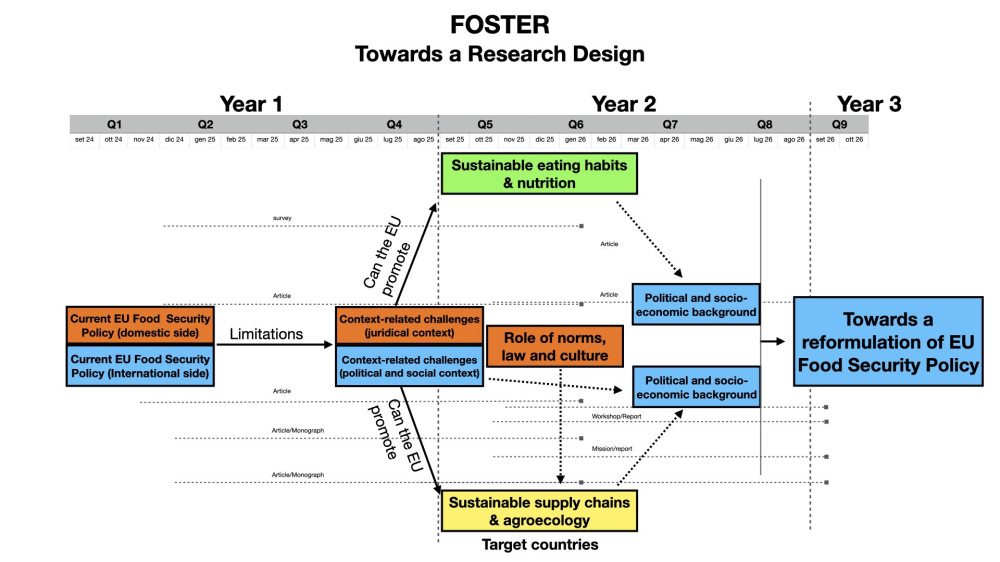
The Research Design of the FOSTER Project is now available online. The document provides a shared framework for the research initiatives that will be carried out over the next two years within the FOSTER Lab, the interdisciplinary group of early-career researchers involved in the project.
Key objectives of the project include:
- Critical Analysis of EU Food Security Policies:
- Conduct a comprehensive analysis of relevant EU and international legal instruments, policies, and programs related to food security, including those addressing domestic food production, food safety, food distribution, and consumer protection.
- Evaluate the effectiveness and efficiency of these policies in achieving food security objectives, considering factors such as economic, social, and environmental sustainability.
- Identify existing gaps, inconsistencies, and areas for improvement in the current EU food security framework.
- Assessment of International Cooperation:
- Analyze the impact of EU cooperation and development policies on food security in developing countries, focusing on areas such as food aid, agricultural development, and support for sustainable food systems.
- Evaluate the effectiveness of different approaches to international cooperation, such as technical assistance, capacity building, and financial support.
- Identify best practices and lessons learned from EU-supported food security initiatives in developing countries.
- Exploration of Innovative Solutions:
- Investigate the potential for transferring and adapting successful European food security models and innovations (e.g., short food supply chains, agroecology, community-supported agriculture) to developing country contexts.
- Assess the feasibility and sustainability of these models in different socio-economic and environmental settings.
- Develop policy recommendations for enhancing the effectiveness of EU international cooperation in supporting food security in developing countries.
- Knowledge Dissemination and Stakeholder Engagement:
- Promote knowledge exchange among researchers, policymakers, and stakeholders through workshops, conferences, and publications.
- Disseminate research findings to relevant stakeholders, including policymakers, civil society organizations, and the general public.